
Nawab Saheb The Westin Mumbai Powai Lake, Powai, Mumbai
These documents were recovered by Keshavlal Mehta, Giridhar's son, in the 1970s, and his descendants continue to reside in the town. Kalyanji raised Shridhar, Nana Saheb's son, under the name Giridhar, and arranged his marriage into a Sihori Brahmin family. In February 1860, the British were informed that Nana's wives had taken refuge in Nepal, residing in a house close to Thapathali. In December 1858, both Nana and the Begum of Oudh were said to be in Bahraich.
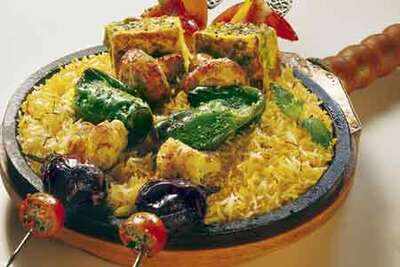
Nawab Saheb Restaurant Mumbai

Beside him, in eternal slumber, rests his beloved wife Qudsia Mahal, a testament to the transience of love and power. In the somber shadows of Iradat Nagar, where the Gomti’s waters whisper secrets to the past, lies the final resting place of King Nasir-ud-din Haidar. The elderly and infirm Nasir-ud-Doulah retired to a small room until morning, marking the beginning of a new era. His court attracted European artists, including Robert Home and George Beechey, the latter serving as Comptroller of the King’s Household. Nasir-ud-Din Haider was captivated by the latest technological advancements, including steamers, which he introduced to the Ganges.
Nawab Saheb – Where Tradition Meets Royal Indulgence.
- To counter this alliance, the imperial loyalist Ghazi ud-Din Khan Feroze Jung III requested Maratha support.
- General Claude Martin entered the court of Awadh under Asafuddaula, and created the plan of his ‘Constantia’, The Nawab was so overwhelmed by his design that he decided to purchase it with ten lakh gold coins.
- The palace is surrounded by a huge wall, and there are verdant grounds inside.
- In 1758, Raghunathrao captured Lahore and Peshawar, driving Timur Shah out of the region.
- The palace is a fine example of the Indo-Saracenic style, characterized by its blend of architectural elements from different South Asian cultures.
This essay studies the Temples found around Madurantakam, a town and municipality in Kancheepuram (Kanchipuram) District in the Indian state of Tamil Nadu. You can find a wide range of vacancies, including Social Media Marketing Specialist, Social Media Specialist, so on. In 1751, there was an ongoing scuffle between Mohamed Ali Khan Walajan, (who was the son of the previous Nawab of Arcot, Anwaruddin Muhammed Khan and hence the rightful claimant) and Chanda Sahib. The local caretakers will tell you many intriguing facts about palace life, which helps in visualizing Nawab Saheb the royal life in the now dilapidated remains. It is perhaps the only palace out of all to come alive even more beautifully at night, with mellow lights shining all over the palace façade and casting dreamy halos in the autumn mist. Rather, they have a uniquely European touch to them, and the reason for this is that most of the Nawabs received their education in Europe, and were inspired enough to order European architects to build their palaces.
- She met Balaji Baji Rao in Pune, dismissed her adviser Baburao Jadhav, and accepted the supremacy of the Peshwa’s office.
- Kim is ethnically a ‘sahib’, but was raised as a low-caste native boy.
- Sadiq Garh palace, a massive structure covering 125 acres, is now a reminder of the splendor enjoyed by the Nawabs of Bahawalpur.
- It was built by Asaf-ud-daula as a country residence where he frequently resorted for hunting, of which he was passionately fond.

Nanasaheb’s brother, Raghunathrao, was an able administrator but his ambitions to become Peshwa ultimately proved disastrous for the Maratha Empire.citation needed He also weakened Afghan control over Punjab, curtailed their incursions toward Delhi, subdued the Rajput and Rohilla states, and effectively neutralized the State of Oudh. The army met the Nawab’s forces at Ambur on 3rd August 1749 and in the battle that took place, Anwar-ud-din was killed.
His subjects adored him, and he reciprocated with a passion for music, drama, and literature, penning 50 books under the pseudonym “Akhtar”. His palace boasted a dedicated table for an array of head-dresses, which he delighted in changing with frequency. His trusted minister, Amin-ud-Doulah, erected the magnificent Aminabad bazar and serai on the Kanpur Road, further solidifying Amjad Ali Shah’s reputation as a patron of grandeur. The erudite Prince Alexis Soltikoff, a Russian diplomat and traveler, described the Husainabad as a grand thoroughfare, replete with edifices of Eastern design and a gilded mosque. Upon the demise of Nasir-ud-Din Haider, the audacious Badshah Begum endeavored to usurp the throne for her progeny, Munna Jan.
